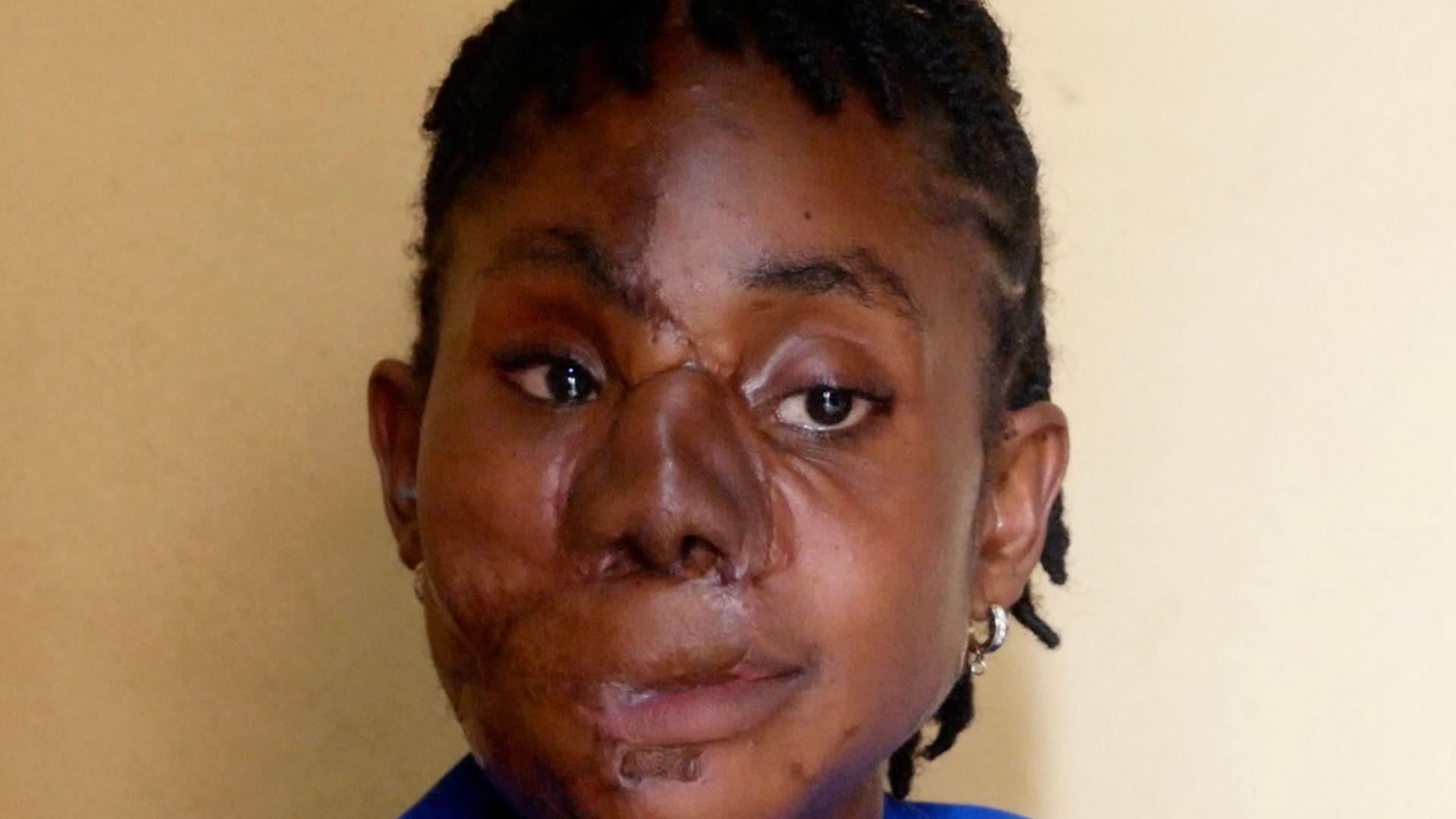
Median Bah, now 23, was shot several times in the face by unknown gunmen when she was 15, according to her account to the BBC. She says armed men stormed her family's compound on 7 April 2018 in Cameroon's Southwest region, one of the two English-speaking areas at the centre of a separatist conflict. She says she was ill and in bed when her brother woke her and fled through a window. She says she chose the door instead and was shot in the thigh and then in the face. She has since undergone at least four reconstructive surgeries in Cameroon, Ghana and India, and more are expected next year. She also underwent a tracheostomy and used a breathing tube for eight years until it was recently removed.
The Anglophone crisis began in October 2016, when lawyers and teachers in the English-speaking regions went on strike over alleged marginalisation by the Francophone-dominated government. Human rights groups accused security forces of using excessive force against the protests, and critics say the crackdown helped fuel an armed separatist movement. By 2017, the International Crisis Group counted a dozen armed groups seeking independence for the two regions and a breakaway state called Ambazonia.
Rights groups have documented serious abuses by both sides. Separatist fighters have been accused of targeted killings, kidnappings for ransom, torture and attacks on schools. Government forces have faced allegations of arbitrary arrests, torture and unlawful killings. Both sides have denied the accusations, although in some instances they have acknowledged responsibility for abuses.
According to UN data published this year, the violence has forced half a million people from their homes. Human Rights Watch says at least 6,000 people have been killed since the conflict began. The UN refugee agency, UNHCR, says more than 70,000 Cameroonians have sought refuge in neighbouring Nigeria. Around 15,000 of them live in three settlements in Ogoja, in Nigeria's Cross River state, according to UNHCR's Richard Effiong.
Glory Akom, 44, is one of those refugees. She fled after soldiers pursued residents into the bush in 2017, she said. She now depends on $67 (£51) in monthly cash assistance from UNHCR to support her children, one of whom has sickle cell disease. Maurine Mangha, 21, said she and five family members fled Akwaya after separatist fighters opened fire during celebrations on 1 October 2017.