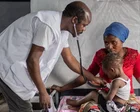
Colette McIvor's letter makes a case that deserves more attention than it usually gets in debates about the UK aid budget. Her argument is that cuts to foreign aid from wealthy countries are likely to make existing health crises worse, and that the people most exposed to that harm live in developing countries. Her letter, responding to a Guardian report on measles surging again as countries allow vaccination coverage to slip, treats the link between funding and disease control as direct rather than abstract.
The figures she cites are specific. The UK intends to cut foreign aid spending from 0.5% to 0.3% of national income by the end of 2027. McIvor also points to a proposed 35% cut in funding to the Democratic Republic of Congo in the Foreign Commonwealth and Development Office's 2025-26 report. She notes that the DRC is already dealing with a deadly Ebola outbreak, and that measles spreading alongside it would add thousands of avoidable deaths to an already severe burden. Those numbers are the strongest part of her case, because they tie a policy decision to a concrete place and a concrete risk.
McIvor also warns that the world could face another serious epidemic. She points to recent measles cases in the US, Mexico and Bolivia, and to the spread of misinformation about vaccines, as factors that may make the situation worse. The risk she describes is not that a single cut will cause a pandemic on its own. Rather, reduced funding for health systems in fragile settings weakens the defences that stop outbreaks from spreading across borders, and misinformation makes it harder to restore vaccination rates once they fall.
Her proposed response is modest and practical. She says she will write to her local MP to highlight the possible consequences of further cuts to the UK's aid budget, and she urges readers to do the same. That is a sensible step for anyone who wants to influence a decision still being made. Policymakers are more likely to reconsider when constituents raise specific, evidence-based concerns than when they hear only general appeals to generosity.
The strongest version of McIvor's argument is the one she states most plainly: disease does not respect borders, and a cut made far away can return as a risk at home. Ministers weighing aid budgets should be asked to show how they assess these health risks before the cuts take effect. Her letter gives readers a clear reason to ask that question.