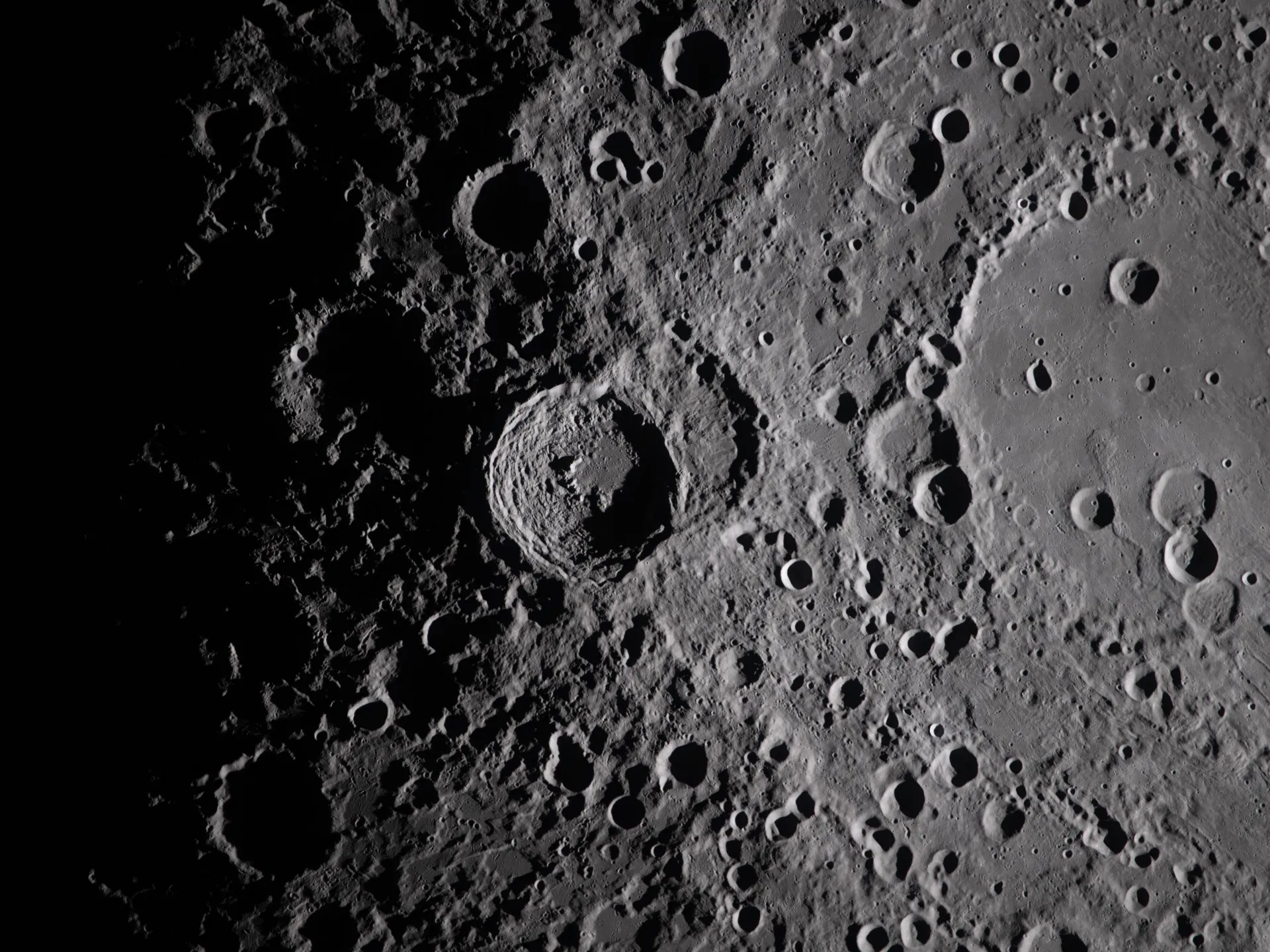
The United States, Russia and China are racing to build nuclear reactors for the moon, according to Al Jazeera. Scientists warn of a possible radioactive mishap.
NASA announced in January plans to develop a lunar nuclear reactor by the end of 2030. The report says Russia, working with China, aims to do the same by 2036. NASA's reactor, Lunar Reactor 1, would produce 20 kilowatts of electricity. The US said it could run on its own for five years without maintenance. Russia's reactor, called Selena, is expected to produce 10 kilowatts and run for a decade without maintenance.
The reactors would power mining of frozen water in permanently shadowed craters near the moon's south pole. That water could supply drinking water, air and rocket fuel for future bases. Elon Musk has also said he wants to extract minerals such as aluminium, titanium and silicon, according to the report.
Simon Middleburgh, director of Bangor University's Nuclear Futures Institute, told Al Jazeera that solar power is too limited for a moon base because the sun reaches any one spot on the moon only half the time. He called nuclear energy the "obvious choice" and said it must be used "responsibly." He estimated that three or four reactors working together would likely be needed.
Middleburgh said the 2030 deadline likely applies to building the reactor. He said the harder challenges are regulation for launch, securing a launch platform, and landing and setting up the system on the lunar surface.
The report notes that the Soviet Union launched more than 30 small nuclear reactors into Earth orbit between the late 1960s and the 1980s. The US has not successfully launched a nuclear reactor into space since a 1965 experiment, which shut down after 43 days.