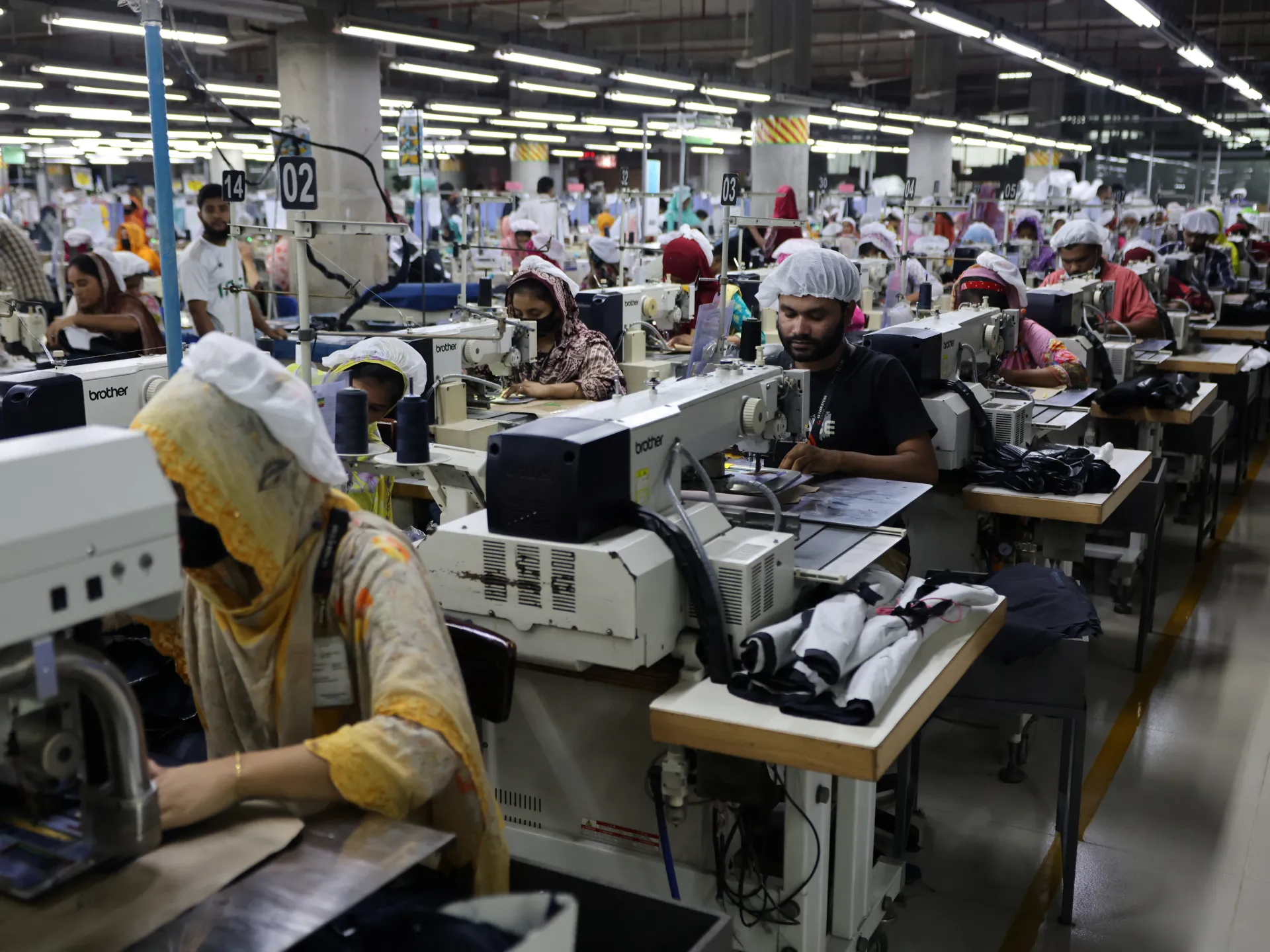
Garment workers in Bangladesh are protesting for higher minimum wages, saying their pay no longer covers basic living costs, according to a report by Al Jazeera.
Laili Begum, a 37-year-old sewing operator at Virtual Bottoms Limited, a ready-made garments factory near Dhaka, told Al Jazeera that she earns about 15,000 taka ($121) a month, or 18,000 to 20,000 taka ($145 to $161) with overtime. Her two children dropped out of school earlier this year because she could not afford their education. "We can barely afford one proper meal a day," she said.
The report says about four million people work in Bangladesh's garment factories, half of them women. The sector accounts for more than 80 percent of the country's export earnings, which reached $39 billion last financial year. The report says the current minimum wage is 12,500 taka ($102), and workers are demanding 30,000 taka ($241).
The Bangladesh Garment Manufacturers and Exporters Association said demonstrations disrupted operations at 529 factories on Sunday and affected nearly one million workers. Police fired tear gas and stun grenades to disperse protesters in the Ashulia industrial area on Sunday and arrested dozens, the report says. On Monday, workers blocked the Dhaka-Tangail highway in Gazipur and clashes with police were reported in Mirpur.
The government announced a six-member wage board to review the demands. Labour Minister Ariful Haque Choudhury urged workers to resume work. Babul Akhter, a workers' representative on the board, called for new wages to take effect with January 2027 salaries and asked for the release of arrested workers.
Official data put annual inflation at 8.34 percent in September, including 7.22 percent for food. The last minimum wage revision in the sector took place in December 2023.