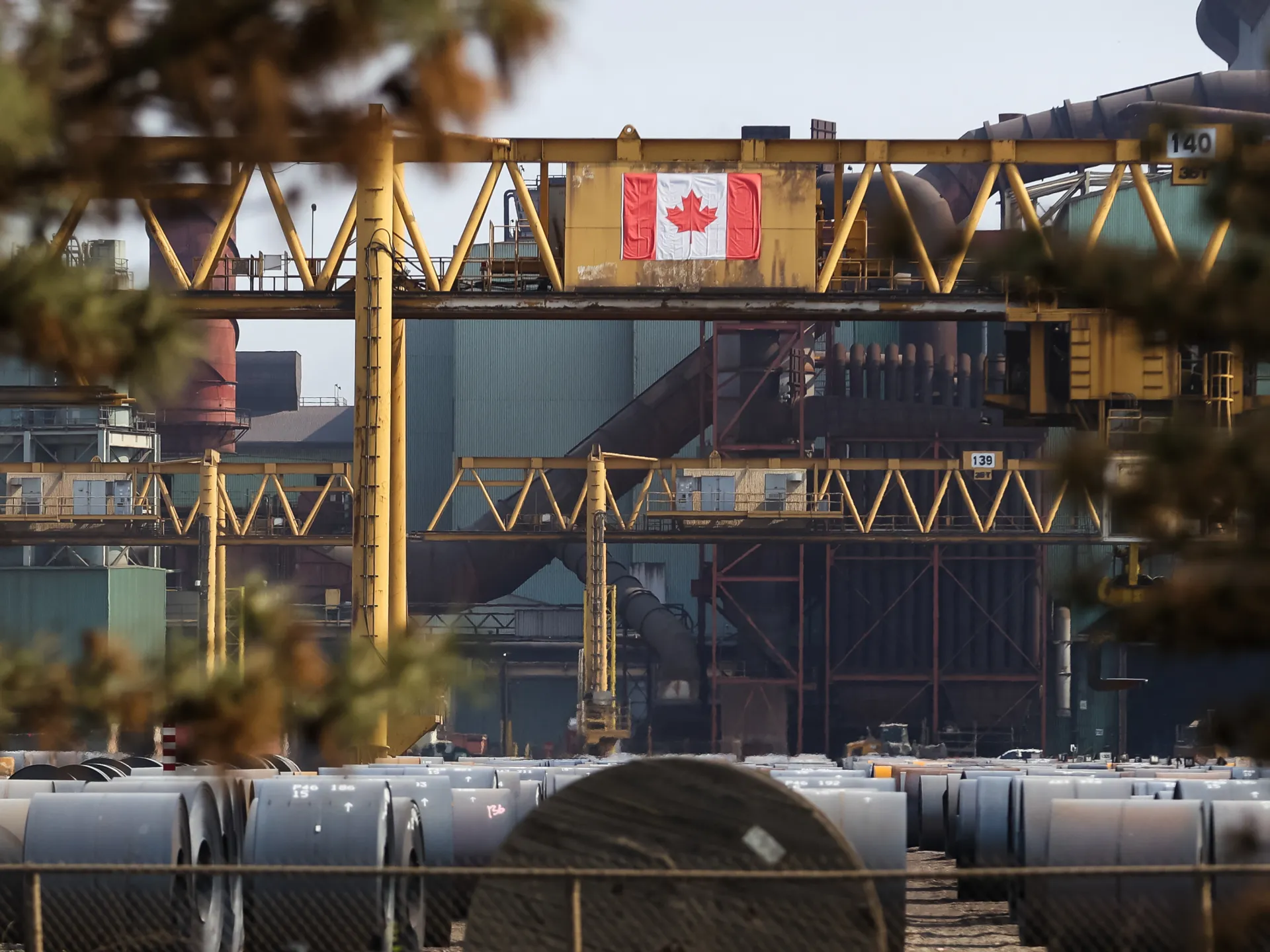
Stelco's US owner, Cleveland-Cliffs, announced in late September that it would temporarily shut down parts of its operations in Hamilton and Nanticoke, Ontario. The company blames US tariffs and cheaper foreign steel for the cuts. As of Saturday, 175 workers at the Hamilton plant had received layoff notices, and the cuts are expected to affect up to 500 workers across both sites.
Chelsey Masteij, a 34-year-old worker at the Hamilton plant, was laid off on October 9. She told Al Jazeera that she was "in a complete mess" after losing her job. She now collects employment insurance.
Ron Wells, president of United Steelworkers Local 1005, said the union questions whether the layoffs were necessary. "Everyone knows we're being used as pawns, that these layoffs weren't necessary," Wells said. He said the union had offered to help Cleveland-Cliffs lobby Ottawa for stronger protections against steel imports, but the company "never took us up on our offer."
According to Stelco, Canada's exports of cold-rolled and coated steel to the US fell by 58 percent in the second quarter of 2026 compared with the quarterly average before the trade war. Colin Mang, an assistant professor of economics at McMaster University, said demand has also fallen in Canada, where the auto industry has been hit by US tariffs. He confirmed that there is less demand for the product from the Hamilton mill.
During a July earnings call, Cleveland-Cliffs CEO Lourenco Goncalves warned that the company might scale back Canadian production unless Ottawa did more to protect its steel industry from imports. He said this would have "consequences for employment in Canada, but will have a positive financial impact on Stelco and on Cleveland-Cliffs."
The Canadian government has threatened legal action against Cleveland-Cliffs, accusing it of breaking promises made when it bought Stelco in 2024. Those promises included keeping at least the same number of unionised jobs and most non-unionised jobs in Canada.