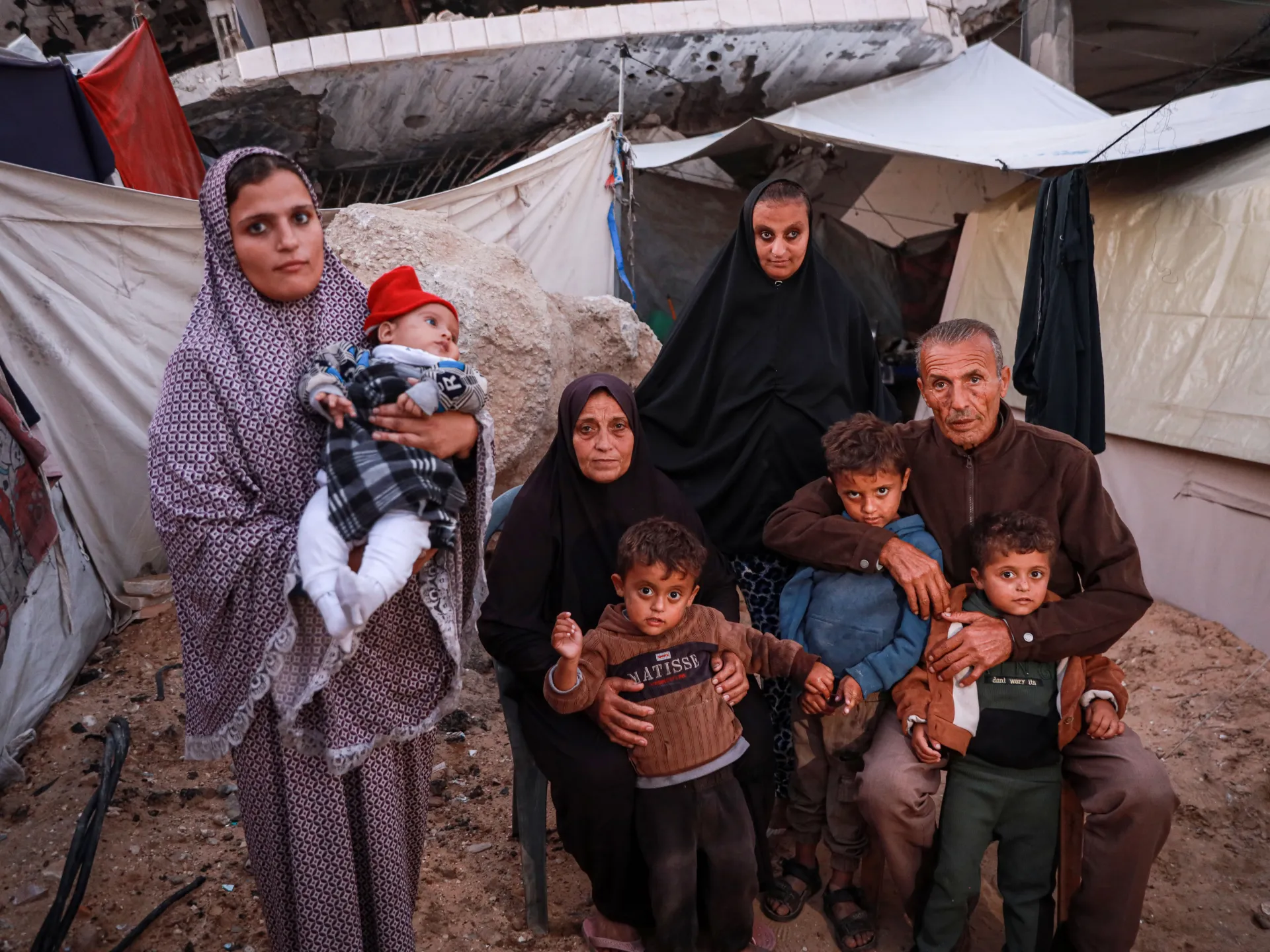
Gaza families are struggling to keep children warm as winter arrives, with flooded shelters, high prices and little aid, according to a report from Gaza City by Al Jazeera.
Amira Saad, 27, lives with 18 relatives, including nine children, under a tarp in a makeshift camp west of Gaza City. She says the family has borrowed a warm garment from a neighbour for her four-month-old son, Mohammed, who mostly wears thin summer clothes. "We were flooded while we were sleeping. The water came inside and soaked our blankets, mattresses and pillows. Everything was wet," she says.
Amal al-Maydana, 46, is raising seven children alone and living in a tent. She says her younger daughters are still wearing summer clothes. "Everything is expensive… children's clothes, shoes, everything," she says. Her family has no heating and relies on blankets.
The report says a nine-month-old baby, Kinan Ahmed Raqiq, died of hypothermia on Thursday. His father told AFP that he found his son's skin had turned blue.
Citing the United Nations Office for the Coordination of Humanitarian Affairs (OCHA), the report says 94 percent of Gaza's population urgently needs shelter assistance and 65 percent of households live in tents or makeshift shelters. It says 650,000 children need winter aid. By September, aid agencies had secured winter clothing for 9,000 households and bedding for 50,000, OCHA said, and funding shortages were further hampering preparations.
The UN Children's Fund (UNICEF) warned that winter conditions raise the risk of hypothermia and respiratory infections. The Gaza Ministry of Health said at least 11 children died from hypothermia last winter. UNICEF is seeking $97.5 million for its 2026-2027 winter response. UNICEF also said on November 9 that flooding had affected more than 106,000 people.
Mohammed Abu Shanar, a 25-year-old shop owner in Gaza City's Rimal market, says many customers ask about winter clothing prices and leave without buying. He attributes high prices to shortages of goods entering Gaza, which he links to continued Israeli restrictions, and to wholesalers' prices. "The prices are very high. They are not within everyone's reach," he says.