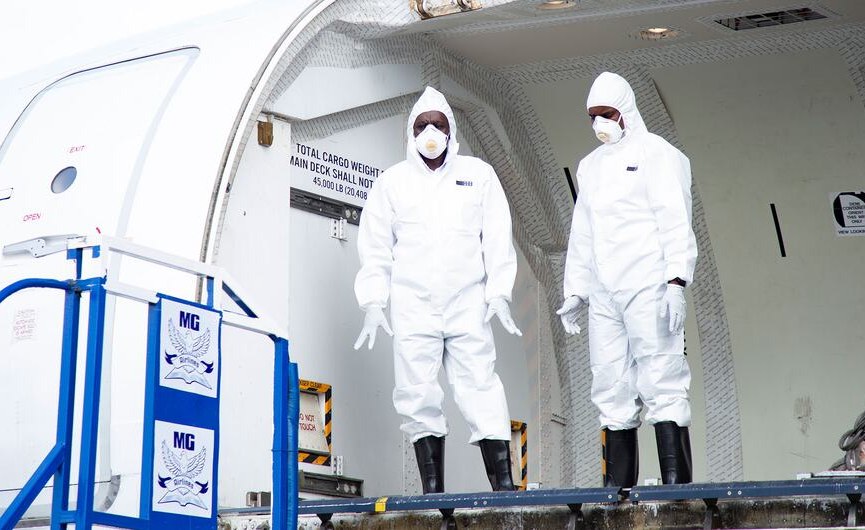
UN responders said on Friday that the Ebola outbreak in the Democratic Republic of the Congo continues to spread amid repeated deadly attacks on civilians and health workers by armed groups. UN Senior Ebola Response Coordinator Julien Harneis said more people are being killed by Allied Democratic Forces (ADF) fighters than by the Bundibugyo virus in recent days. He said attacks on "tens of villages all across the south of Ituri and North Kivu" go unnoticed. "People are scared, people are furious at the lack of action on this," Harneis said.
WHO's Dr Chikwe Ihekweazu, Executive Director of the Health Emergencies Programme, said about 400 to 500 new infections are still identified each week. He linked this to cases emerging in rural and hard-to-reach areas. He said prevention efforts have brought "a significant reduction" in transmission in previous hotspots, including Bunia, Mongbwalu, Rampara and Nizi in Ituri province.
WHO condemned attacks on frontline health workers and community awareness officers. One attack in Cantine-Aloya, North Kivu, killed 66 civilians, including three health workers, and looted three health facilities. Two weeks earlier, a nurse was killed and another health worker was badly injured in Tshopo province while responding to an Ebola alert. Other incidents included an arson attempt on a treatment centre and stones thrown at a vehicle used for safe burials.
WHO Director-General Tedros Adhanom Ghebreyesus said, "We cannot focus only on Ebola." He said some people in affected communities told him personally that Ebola is "a lesser evil compared to some of the other threats they face."
The outbreak was declared in May. The source reports more than 11,000 confirmed cases and more than 5,000 deaths to date.
In a separate briefing, the UN World Food Programme warned that nearly 29 million people in the DRC face acute food insecurity, mostly in conflict and Ebola-affected eastern and northeastern provinces. WFP's Jean-Martin Bauer said conflict is driving the hunger crisis alongside Ebola. "What we need right now is access, and we need resources," he said.