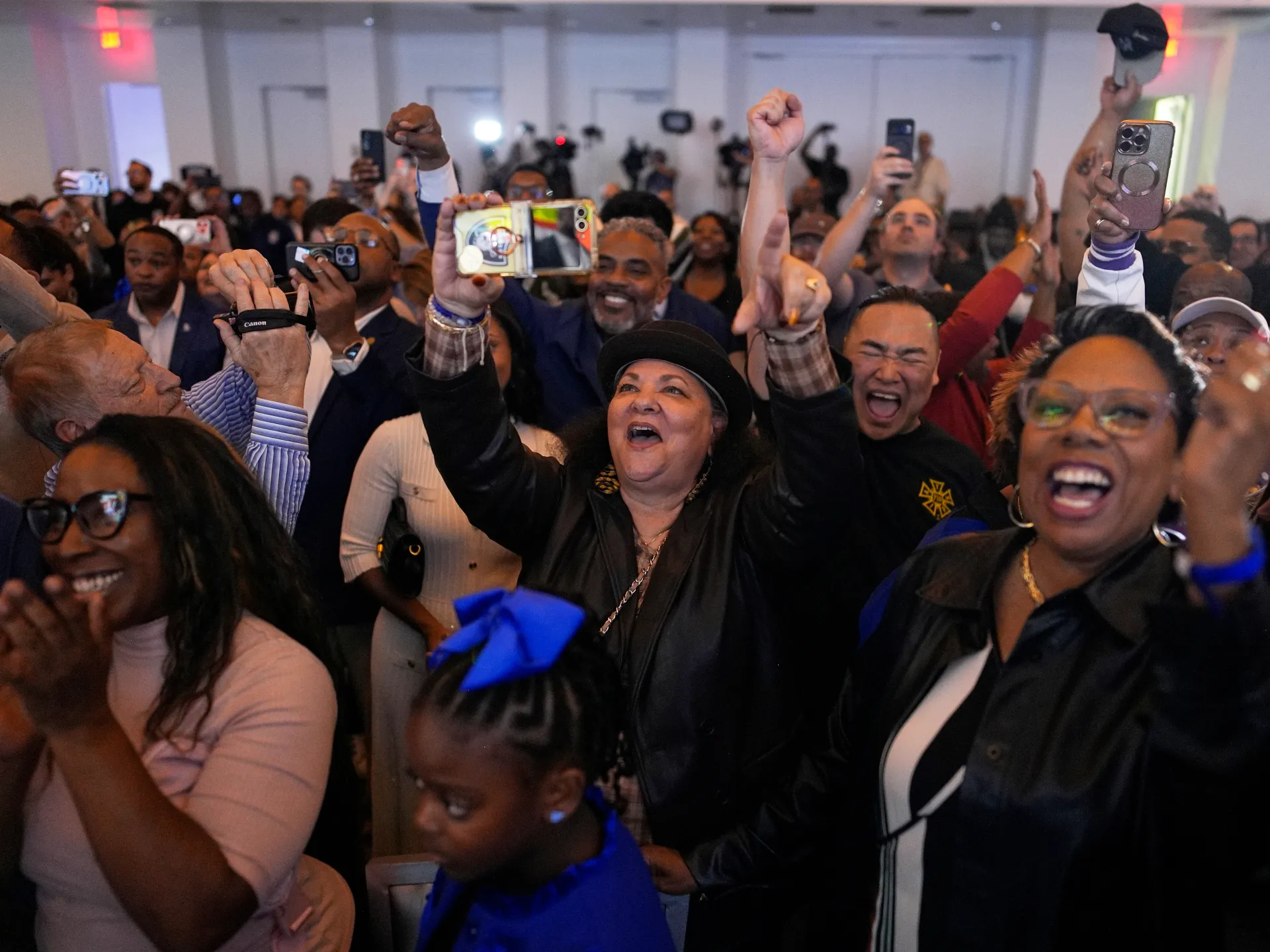
Democrats have taken control of both chambers of Congress in the US midterm elections, according to the report. Foreign governments are watching how the result could affect US policy on Iran, Russia-Ukraine and trade.
Iran's parliament speaker Mohammad Bagher Ghalibaf, who is also Iran's chief negotiator in talks with the US, wrote on X that "Americans said NO TO WAR, and we endorse this message." Iran's Supreme Leader Mojtaba Khamenei said shifts in party control in Washington would not change the US's "hostility" toward Tehran, according to a statement shared by Iranian state media.
Trump has acknowledged that the US-Israel war on Iran likely affected his party's poor performance, saying voters were probably not ready "for the short-term consequence of the price of gasoline."
In Israel, opposition figure Yair Golan said the US vote reveals "just how toxic Netanyahu has become" among US Democrats and Republicans. Netanyahu had no immediate reaction, according to the report.
European Parliament Vice President Christel Schaldemose said she was "cautiously optimistic on Europe's behalf," and said the results could benefit support for Ukraine, the green transition and relations with the rest of the world.
UK Health Minister James Frith said the UK would maintain strong ties with Washington. French Finance Minister Roland Lescure said France would wait to see whether Trump adjusts his approach.
Spanish Prime Minister Pedro Sanchez said the Democratic victory was emblematic of the "unravelling" of the global far right. Greek government spokesman Pavlos Marinakis said US-Greek relations would not be affected.
Russian Deputy Foreign Minister Sergey Ryabkov said Democratic Party leaders had a "sharply negative" approach to relations with Moscow, and that Russia's Ukraine policy does not depend on fluctuations in other countries' politics. Kremlin spokesman Dmitry Peskov said Moscow hoped the results would not affect Trump's "peacemaking efforts."
China's Foreign Ministry spokesperson Mao Ning said Beijing would continue its "constructive strategic relationship" with the US and called US elections a "domestic affair."