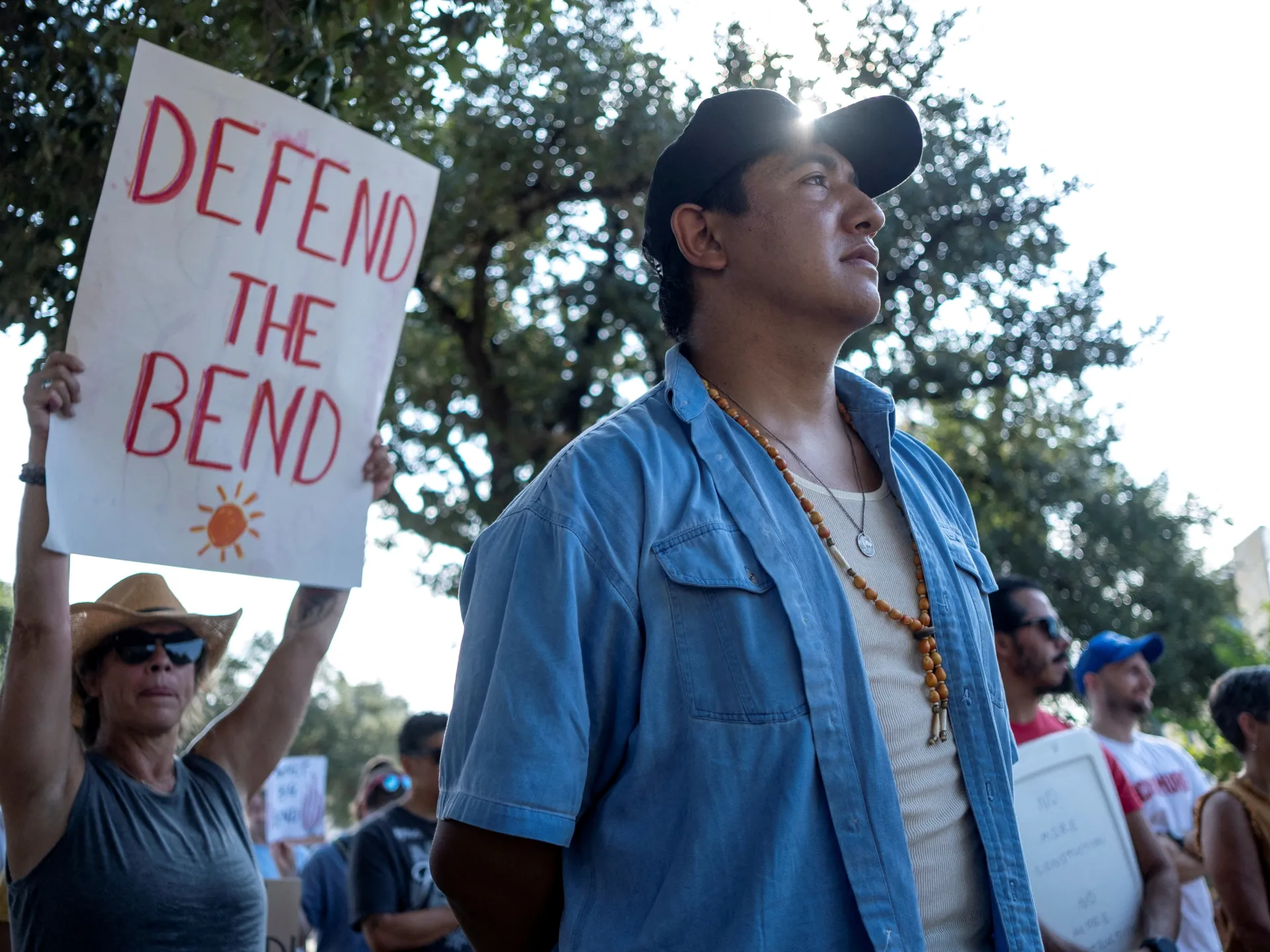
The US Supreme Court has allowed the Trump administration to build a border wall through a remote section of Big Bend National Park in West Texas. In a decision on Monday, the court granted the government's emergency request to lift a lower court's injunction that had paused construction while the case was litigated.
The court said the injunction "impedes the Government from advancing its 'compelling interests' in border security and integrity."
The lower court ruling came from US District Judge Kathleen Cardone, who blocked construction in October. She wrote that while the Big Bend sector makes up more than 25 percent of the US-Mexico border, it accounts for only 0.3 to 2.2 percent of migrant apprehensions. "Therefore, if the Big Bend Sector is an area of high illegal entry, so is every other sector, and the waiver authority would apply to the entire US-Mexico border," Cardone wrote.
The Supreme Court said the government was "exceedingly likely to prevail" on its argument that Cardone lacked jurisdiction under the 1996 Illegal Immigration Reform and Immigrant Responsibility Act. Under that law, district courts can hear only claims alleging a violation of the US Constitution. The court found that the challengers' claim did not qualify, writing that "there is no such thing as a 'constitutional' major-questions claim."
Justice Ketanji Brown Jackson was the only justice who indicated she would have denied the government's request. She did not explain her reasoning.
The lawsuit was brought by the Center for Biological Diversity, Friends of the Ruidosa Church and a local river guide and landowner against the Department of Homeland Security. It challenged waivers the agency used to fast-track border construction and sidestep environmental and conservation laws. Plaintiffs said that without the waivers, construction would have to comply with the Endangered Species Act, the National Environmental Policy Act and the National Historic Preservation Act.
The Trump administration has described the Big Bend area as an artery for irregular border crossings and drug trafficking. Opponents say the wall would disrupt a landscape that includes habitat for endangered species such as the Mexican long-nosed bat.