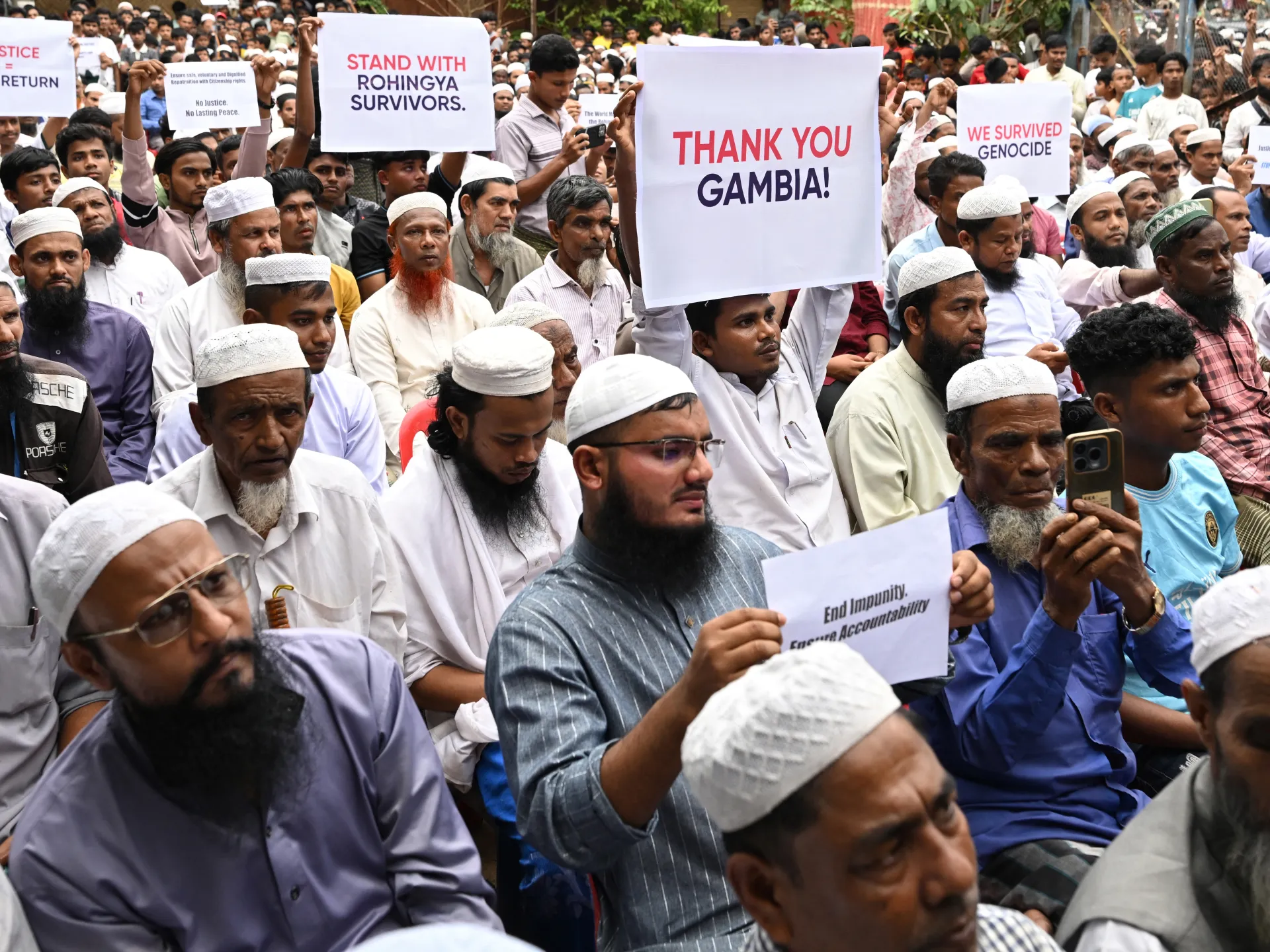
The International Court of Justice has found Myanmar responsible for genocide against the Rohingya during military operations in 2017, according to the report. The court found more than 10,000 people had been killed. The case was brought by The Gambia.
Refugees in Cox's Bazar, Bangladesh, followed the verdict on mobile phones, laptops and large screens. Umme Ruman, who lives in Camp 1E, said: "I celebrated with tears of joy because, for the first time, the world acknowledged what happened to us."
Eighteen-year-old Mohammad Rehan said he hoped the verdict could open the door for the Rohingya to return home. "Just imagining that made me so happy," he said.
The report says the ruling does not change daily conditions in the camps. Rain fell on Thursday as Cyclone Akvan moved toward the Bay of Bengal, adding to the hardship of families in crowded shelters.
Nasir Uddin, an anthropology professor at the University of Chittagong who researches the Rohingya crisis, said the judgement was essential to establish global justice. Michael Kugelman, a senior fellow for South Asia at the Atlantic Council, told Al Jazeera that the ruling could affect negotiations between Bangladesh and Myanmar over repatriation, and that Dhaka would need stronger assurances about safe returns.
Rohingya refugees said they want accountability for those responsible, restoration of their rights and citizenship, and a safe and dignified return to Myanmar. Nurul Amin said: "We are hoping this judgement will lead to something more – that we will finally be able to return home with our rights and dignity."