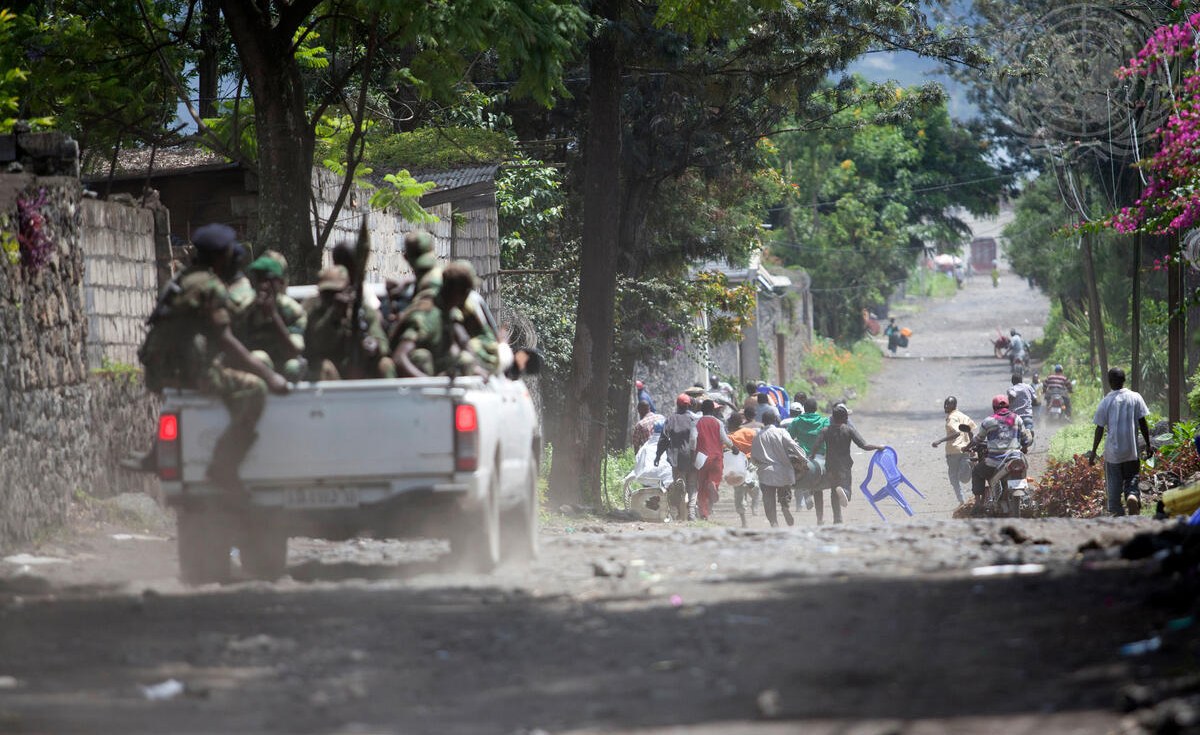
The report makes a strong case that drones have changed the military balance in eastern Democratic Republic of the Congo. Rebel groups and government forces are both buying and using unmanned aerial vehicles for reconnaissance, surveillance and, increasingly, attack. According to the report, M23 captured Goma in January 2025 and Bukavu a month later, and many experts believe those gains would have been impossible without an extensive drone arsenal.
The most alarming detail is reach. The report says M23 used kamikaze drones in its February 2026 attack on Kisangani airport, roughly 400 km from the frontline, damaging the control tower and runway. Former South African brigadier general Peter Sereko, quoted by ISS Today, said that a decade ago the group had 'small calibre weapons' but that by 2024 it had 'the capability of a regular army.' Drones are the reason a militia can now threaten cities far from its positions.
The report also shows that the strategic value of these systems works against de-escalation. Drones strike mining sites such as Rubaya, which the report says produces around 15% of the global coltan supply and which UN experts estimate earns M23 US$800 000 a month. Because drones are cheap, easier to adapt than heavy weapons, and useful as propaganda, neither side has a clear incentive to stop buying them. Any future agreement that ignores aerial capability will leave both armies able to rearm quickly.
The next steps should follow from that evidence. Peace talks and the Washington Accords framework should include limits on drone imports and transfers, with monitoring by the UN Group of Experts, whose June 2026 report the article cites. Governments in the region should also adopt the risk-based import controls that the Africa Center for Strategic Studies and the Institute for Security Studies have urged, and invest in anti-drone defences. Civilian protection needs to be a priority, since the International Committee of the Red Cross warns that drone use 'drastically' increases the risk of harm to civilians.
Ending the drone race will not be easy, and the report is right to say so. Rwanda, Burundi, Turkey, China and the United Arab Emirates all have stakes in this conflict, and the report notes unconfirmed reports that Ukraine may also be involved. Still, the lesson is plain. A ceasefire that counts troops and territory but not the sky above them will not hold.