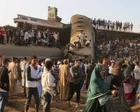
Seven people were killed and more than 100 were injured when two trains collided on Sunday in al-Ayyat district in Giza province, about 30 miles south of Cairo, officials said. A train travelling to Fayoum province crashed into the rear of a train heading to Aswan. An inspection indicated that the Aswan-bound train had been stationary on the same track. A stationary train on a live line is not a subtle failure. It is the kind of basic safety lapse a functioning signalling and control system should prevent.
The report notes that train derailments and crashes are common in Egypt, and that the railway system has a history of mismanagement and poor maintenance of equipment. Those words describe a pattern, not a single accident. The same district saw a collision last September, when a train driver and his assistant were injured after two freight trains crashed. Two incidents in the same area within months should have triggered a hard look at how trains are dispatched and monitored there. The report does not say whether that look happened.
President Abdel Fatah al-Sisi said in a social media post that he had ordered a prompt investigation. That is the right instruction, but an investigation is only as useful as its findings. The public should be told who was responsible for the track occupancy, what the signalling records show, and whether the maintenance and safety rules that were meant to prevent this were followed. Vague assurances after each disaster have not stopped the next one.
The rescue, as described by resident Ayman Gamal, was carried out by ordinary people who rushed to the scene, pulled out survivors and called ambulances. He said some passengers were trapped inside a carriage of the stationary train and died. Emergency teams and cranes were later dispatched, and the railway authority said it aimed to restore services to normal schedules as soon as possible. Speed in clearing the line matters for commuters, but it must never come at the expense of a full examination of what went wrong.
The government has announced modernisation initiatives to improve its railways, and it should be judged by results. Egypt's deadliest train crash, in 2002, killed more than 300 people after a fire broke out on an overnight train from Cairo to southern Egypt. More than two decades later, the country is still counting its railway dead in dozens of separate tragedies. The next step should be a published investigation with clear accountability, and a transparent timetable for upgrading the signalling and maintenance that a stationary train should never have been allowed to undermine.